Awnings come in several styles, each designed to provide shade, weather protection, and aesthetic appeal. The right type depends on where it will be installed, the level of protection required, and the architectural style of the building. Below are the most common types of awnings used in residential and commercial spaces
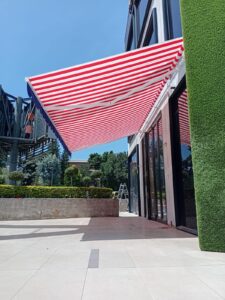
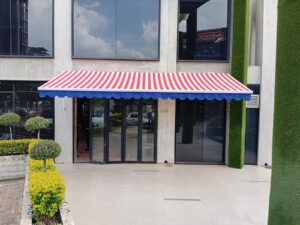
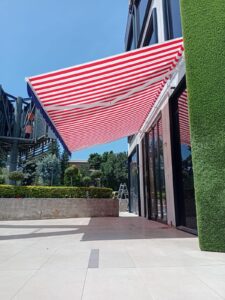
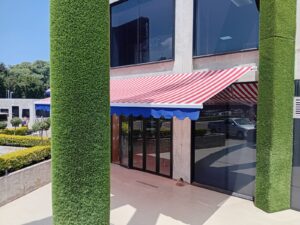
Retractable Awnings are one of the most popular options because they offer flexibility. They can be extended when shade is needed and retracted when you want sunlight or when weather conditions become harsh.
Key features:
• Manual or motorised operation
• Adjustable shade coverage
• Protects outdoor furniture from sun damage
• Ideal for patios, decks and balconies
They are particularly suitable for homes that want shade without permanently blocking natural light.
2. Fixed (Stationary) Awnings
Fixed awnings are permanently attached structures that remain in place all year round. They are built with a rigid frame covered in fabric, aluminum, or polycarbonate.
Key features:
• Constant protection from sun and rain
• Durable and sturdy
• Often used above windows, doors, or shopfronts
These awnings are commonly used for commercial properties because they can also incorporate branding or signage.
3. Drop Arm (Fall Arm) Awnings
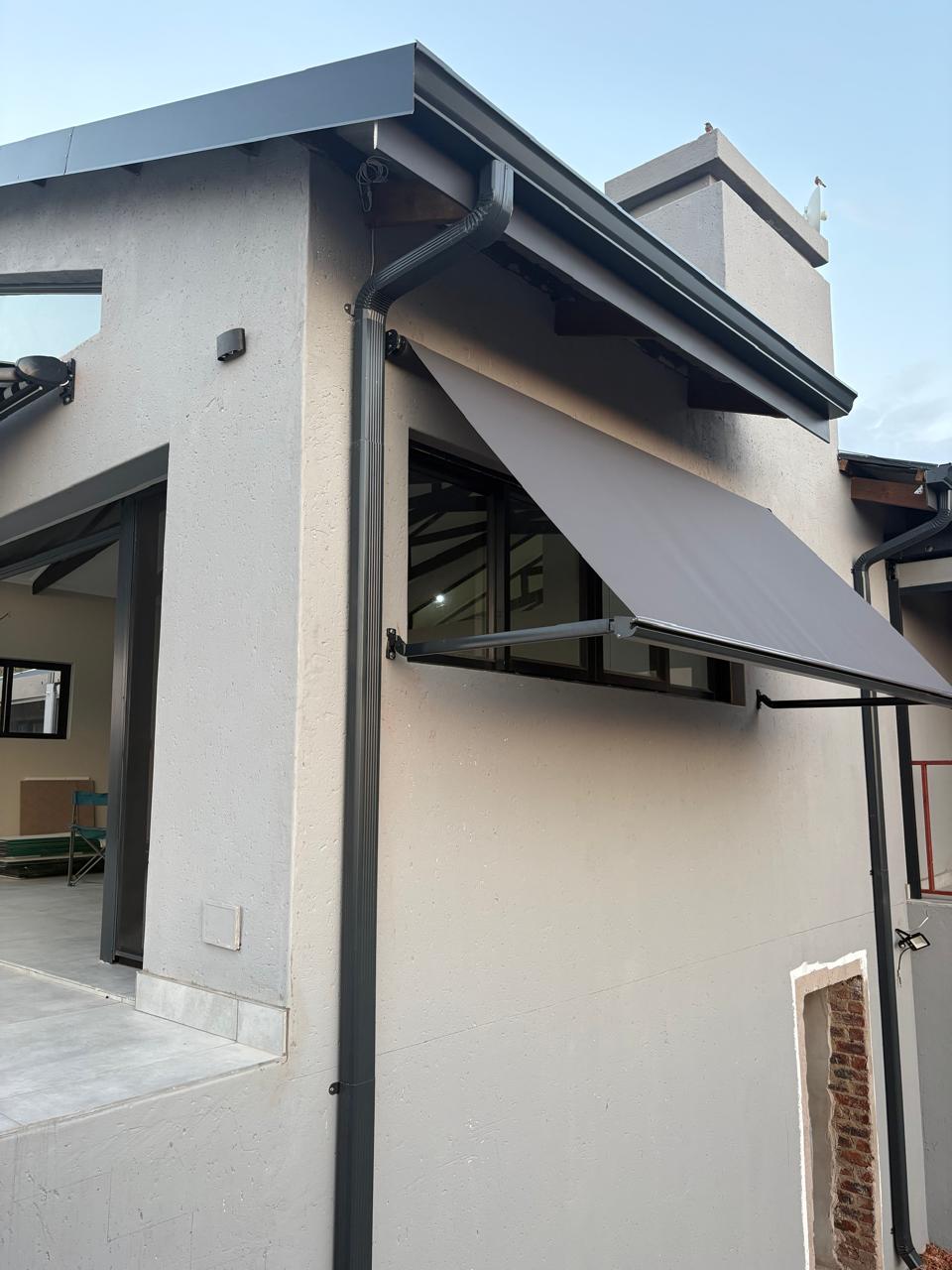
Drop arm awnings extend outward from a window and are supported by side arms that hold the fabric at an angle.
Key features:
• Allows airflow while blocking direct sun
• Great for upper-floor windows
• Maintains outward views
They are excellent for controlling indoor temperatures by reducing heat entering through windows.
4. Vertical Drop Awnings / Outdoor Blinds
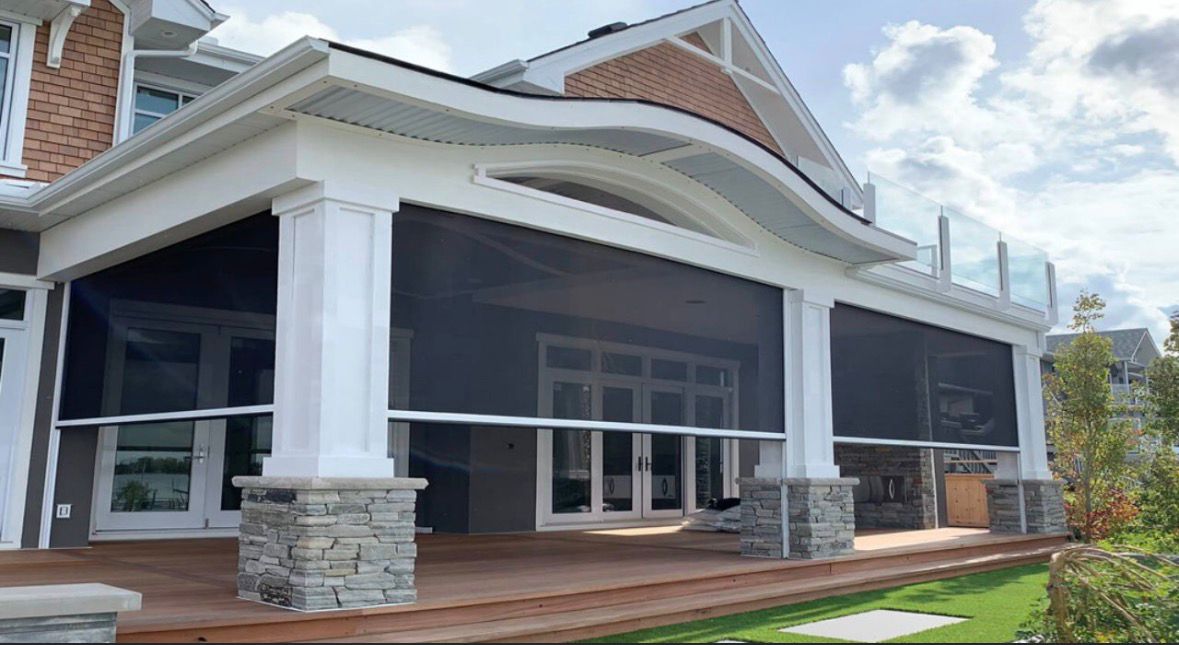
Vertical drop awnings operate like a blind, dropping straight down to enclose an area.
Key features:
• Protects against sun, wind and rain
• Creates privacy
• Ideal for patios, verandas, and pergolas
Many modern systems use PVC or mesh fabrics that still allow light and visibility.
5. Dome Awnings
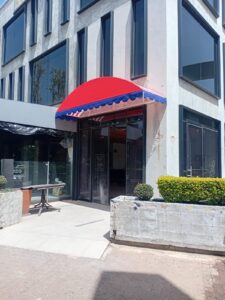
Dome awnings have a curved, rounded shape and are often seen over doorways or shop windows.
Key features:
• Decorative and stylish
• Provides rain protection for entrances
• Popular for restaurants, cafés, and boutique stores
They add a strong architectural feature to a building façade.
6. Concave and Convex Awnings
These are variations of traditional window awnings where the shape curves inward (concave) or outward (convex).
Key features:
• Highly decorative
• Common in hotels and retail spaces
• Customisable with colours and branding
They are typically fixed-frame awnings.
7. Pergola or Louvre Roof Awnings
These are more advanced outdoor shading systems that combine structure with adjustable blades or retractable fabric roofs.
Key features:
• Covers large outdoor areas
• Adjustable for sun, shade, or ventilation
• Creates a fully functional outdoor living space
They are commonly used for luxury patios, restaurants, and entertainment areas.
✅ In summary:
• Retractable awnings offer flexibility.
• Fixed awnings provide permanent protection.
• Drop arm awnings are ideal for windows.
• Vertical drop awnings protect patios and outdoor spaces.
• Dome and curved awnings add architectural style.
• Pergola or louvre systems create premium outdoor living areas.
Let us assist you with making the right informed decision best suited to your lifestyle are.